


Holy Bible Daily Prayer
4.31.60K Reviews
App Specs
- Version
- 2.0.0
- Updated On
- License
- Free
- Downloads
- 1,000,000+
- Developer
- GoFish Apps
- Categories
- Books & Reference
- Platform
- Android
Screenshots
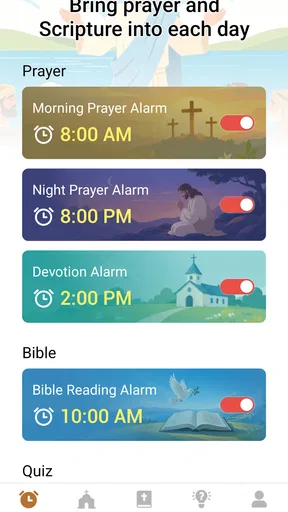
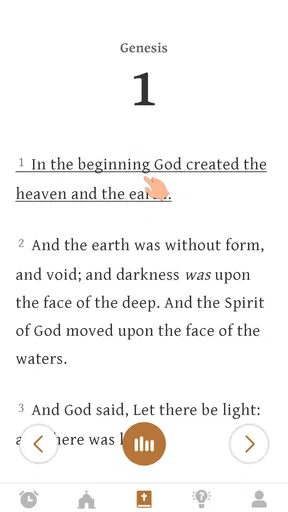
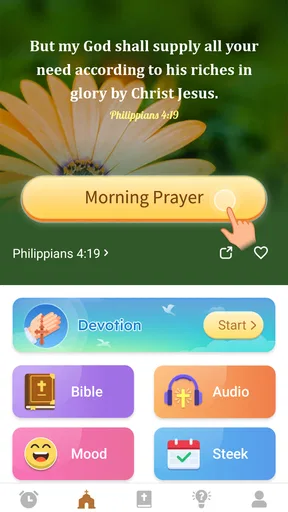
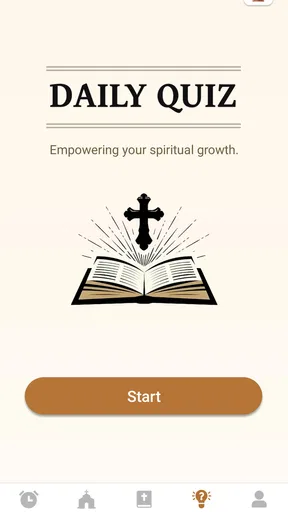
 Analysis by AppCompare
I approached Holy Bible Daily Prayer as a quiet reading and reflection app rather than as a replacement for every Bible tool on a phone. That distinction matters. Its place in the Books & Reference category is clear: it is aimed at people who want Scripture close at hand and who may also appreciate a more prayer-focused routine around their reading. The store summary calls it a Bible spiritual companion, while the short description keeps things simple with “Holy Bible.” In practice, I found that its value depends less on how many extras you expect and more on whether you want a straightforward way to return to biblical reading during ordinary parts of the day.
The app is free, developed by GoFish Apps, and suitable for Everyone. It runs on Android 8.0 or later, so it remains accessible on many older phones. The current version is 2.0.0, and its presence on more than a million devices suggests that it has found a substantial audience. Its average rating sits at 4.3 from around 11 thousand ratings, with roughly 1.6 thousand written reviews. Those figures do not tell me whether it will suit a particular prayer habit, but they do indicate that this is an established app rather than an obscure experiment.
How I Would Decide Whether It Fits My Routine
I’d use this section to test the app against the rhythm I already have, rather than promising myself a new routine I may not keep. A few brief sessions can show whether opening it feels like a helpful pause or another phone task to manage. I’d also decide in advance what would count as a reason to continue: a calmer start to the day, easier access to Scripture, or a more consistent moment for prayer.
Start with the habit, not the feature list
My first question would be simple: do I want a Bible app for quick access, or do I want a full study workspace? Holy Bible Daily Prayer makes more sense for the first need. If I picture myself opening my phone in the morning, reading a passage, pausing for a short prayer, and returning later for a few minutes of reflection, the concept is a natural fit. If I need extensive cross-references, scholarly notes, several translations, original-language tools, or a serious annotation system, I would judge the app by a much higher standard and look closely at specialist alternatives instead.
This is the most useful decision criterion because spiritual apps can become cluttered very quickly. A person may install one hoping for encouragement, then discover that the experience is dominated by search tools, social features, study aids, or notifications. A person preparing a sermon has different needs from someone trying to build a personal evening routine. I would not ask this app to serve both jobs equally well without first checking how its reading experience feels on my own phone.
Think about how you actually read
I also recommend deciding whether your Bible time usually happens online or in places where connectivity is uncertain. A phone-based Bible reader is convenient because it is already in your pocket, but convenience only helps if the relevant reading experience is dependable when you need it. Before relying on it during travel, a commute, or a retreat, I would open the passages I expect to use and test the app in the exact circumstances that matter to me. That small check is more useful than assuming every mobile reading app behaves like a printed Bible.
Screen size is another practical consideration. On a larger phone, a passage can feel comfortable and focused. On a smaller or older display, long reading sessions may feel less natural than using a physical Bible or an e-reader. I found the app easier to imagine as a companion for short visits than as my only reading environment for extended study. That is not a criticism of the idea; it is a reminder that the best format depends on whether I am reading a few verses or spending an hour comparing passages.
Worth Reading Before You Choose

EA SPORTS FC Mobile 26 Is a Bigger Football Game, but It Takes Time

Flipboard Shows What News Apps Must Do Beyond the Feed

Switching to Android Auto Means Rethinking Your Driving Routine

Google Calendar Makes a Crowded Week Easier to Manage

Ludo King Makes the Most of the Minutes Between Plans

Baby Panda World Brings Quick Play to Modern Phones, but Its Game Library Feels Busy
Separate prayer support from spiritual depth
The word “prayer” can mean different things to different users. Some people want a structured devotional path, some want reminders that help them pause, and others simply want Scripture to anchor an unplanned conversation with God. I would not install this app expecting a spiritual routine to build itself automatically. The app can support a habit, but the habit still needs a personal decision: a time, a place, and a reason to return.
One approach that worked for me was to keep the routine deliberately small. I would open the app after breakfast, read a manageable portion, choose one sentence that stayed with me, and turn that sentence into a personal prayer. In the evening, I could revisit the same thought without trying to complete an ambitious study plan. This makes the phone useful without allowing the phone to dictate the entire experience.
What I would check before committing
Before making it my main Bible app, I would spend several sessions checking four things:
- Reading comfort: Can I follow a passage without constant zooming, tapping, or visual strain?
- Routine fit: Does opening it naturally lead me into prayer, or do I find myself searching for functions instead?
- Reference needs: Can I live with a simpler experience, or do I depend on detailed study tools?
- Device practicality: Does it behave comfortably on my phone and in the places where I usually pray?
These checks are more revealing than a generic promise of inspiration. A free app is easy to try, but the real cost is attention. If it interrupts a routine or makes reading feel cumbersome, I will stop opening it regardless of how attractive the idea sounds.
Where Holy Bible Daily Prayer Makes the Strongest Case
Here I’d focus on the situations where the app’s prayer-oriented purpose can make a practical difference: a short reading between obligations, a familiar passage revisited later, or a gentle return to Scripture after a lapse in routine. Its strongest case is not that it replaces every Bible resource, but that it can make a small, personal practice easier to begin. I’d judge its lasting value by whether those moments become natural rather than forced.
A low-friction entry point for daily reading
The strongest appeal is accessibility. Because it is free, I can try it without turning the decision into a purchase. That matters for someone who is curious about digital Bible reading, someone returning to Scripture after a long break, or a family member who wants a simple starting point. The Everyone content rating also makes it easier to consider for a household where the app may be used by people of different ages.
I especially like the possibility of treating it as a doorway rather than a demanding program. A person does not need to be an experienced Bible student to benefit from having Scripture available during a spare moment. The app’s identity as a spiritual companion suggests a gentler role: it can sit alongside a personal routine instead of requiring the user to understand a complicated system first.
Useful in ordinary, interrupted moments
A realistic scenario is a busy weekday morning. I may have only a few quiet minutes before work, and a printed Bible may be in another room. With a phone already nearby, I can open the app, read a short passage, and use the final minute to form a prayer around one idea. Later, if the day becomes stressful, I can return to that same reading instead of trying to begin an entirely new study session.
Another use is the transition between activities. I might open it after turning off the television, before sleep, or while waiting for an appointment. These moments are not impressive study conditions, but they are exactly where a digital companion can be helpful. The app earns its place when it makes a meaningful pause easier to begin.
A practical bridge between Scripture and prayer
Many Bible apps are excellent at locating a verse but leave the user to decide what happens next. The prayer-centered framing gives this app a more specific purpose. I can read with a question in mind: What does this passage reveal about God, what does it challenge in me, and what can I bring into prayer today? Even without turning the session into formal study, those questions prevent passive scrolling.
My preferred workflow is to read once for the overall sense, read again more slowly, and then write or silently speak one response. The important insight is that I would not treat the app as a stream of inspirational fragments. I would use it to keep a passage in view long enough for reflection. That makes the experience more personal and less dependent on constantly discovering something new.
Good for people who want simplicity before customization
I would recommend trying it first to people who feel overwhelmed by feature-heavy alternatives. A large Bible platform can be valuable, but a crowded interface may create the impression that I need to compare, highlight, save, share, and organize everything before I have actually read. A simpler companion can remove that pressure. The trade-off is that simplicity may also mean fewer ways to tailor the experience to advanced study habits.
The app’s scale is reassuring for a first choice. With over a million installs and a 4.3 average, it has enough public use to make trying it feel reasonable, while the free price removes one obvious barrier. I would still treat the rating as a starting signal rather than a guarantee. People rate Bible apps according to very different expectations, and a user seeking a devotional companion may be delighted where a seminary student wants much more.
Three habits that make the app more useful
First, I would choose a fixed trigger instead of relying on motivation. Opening the app after coffee or before putting the phone on charge creates a clear association. Second, I would keep a separate paper notebook if I want lasting reflection. That prevents the app from becoming a place where thoughts disappear as soon as I close it. Third, I would read the surrounding verses rather than stopping at a single sentence that happens to sound encouraging. This protects the habit from becoming detached quote collecting.
A fourth tactic is to use the app for continuity. If I miss a morning, I would not try to compensate with an oversized session. I would simply resume at the next realistic opportunity. This is a small but important trade-off: a spiritual routine is more likely to survive when the app supports consistency instead of making every missed day feel like failure.
Where the experience may feel limited
The same simplicity that helps beginners may frustrate experienced readers. If I need detailed navigation, research material, or a carefully organized library of notes, I would want to verify that the app matches those expectations before moving away from a more established study tool. I would also avoid assuming that a prayer-oriented presentation automatically provides a complete devotional curriculum. A companion can encourage reflection without replacing a church community, a trusted study guide, or a conversation with a pastor.
There is also a psychological limitation to any phone-based prayer tool: the device is full of distractions. A message, another app, or the temptation to browse can break the quiet moment I was trying to create. For that reason, I would sometimes use the app with notifications silenced and the phone placed face down immediately afterward. If I know that opening my phone almost always leads me somewhere else, a printed Bible may be the wiser choice.
How it compares with the usual alternatives
Compared with a printed Bible, Holy Bible Daily Prayer wins on portability and immediate availability. A physical book wins on focus, tactile familiarity, and freedom from battery or phone distractions. I would choose the app for travel, short breaks, and spontaneous reading, while keeping print for longer sessions when I want to slow down.
Compared with a general-purpose Bible app, this one is more appealing when prayer is the center of the routine rather than an afterthought. A general app may be better for broad searching, comparison, and study organization. I would choose that category when I am researching a theme or preparing to teach. I would choose this app when I want the reading moment to lead naturally into personal reflection.
Compared with a dedicated devotional app, it occupies a middle ground. A devotional service may offer a tightly written daily meditation and a predetermined sequence. Holy Bible Daily Prayer is more suitable if I want Scripture itself to remain central and prefer to bring my own questions. The advantage is flexibility; the disadvantage is that users who need strong daily structure may have to provide more of that structure themselves.
When switching makes sense and when it does not
Moving from a printed Bible to this app is an easy experiment because the financial commitment is zero. The real switching cost is behavioral: I need to remember where the app is, protect reading time from other phone activity, and decide whether digital reading feels natural. I would not discard a physical Bible immediately. Using both for a week would show whether the app adds convenience without weakening the kind of attention I value.
Switching from a feature-rich Bible platform is different. I may lose familiar workflows, saved material, or study habits, even if the new app feels calmer. I would first identify the one function I use most and check whether I can live without it. If that function is essential to my work or worship, keeping the established app and adding this one for prayer may be smarter than replacing anything.
Switching from a devotional app also deserves care. If I depend on a guided sequence to open the Bible every day, a more open-ended companion could make me less consistent. In that case, I would use Holy Bible Daily Prayer as a secondary reading space rather than expecting it to reproduce the structure I already have.
Who should try it first
I think it is particularly suitable for a new Bible app user, a person rebuilding a daily reading habit, or anyone who wants a phone-based prompt toward prayer without paying for access. It may also suit someone who moves between home, work, and travel and wants one portable reference point. Older Android devices are not automatically excluded, since the minimum operating system is Android 8.0.
I would be more cautious recommending it as the only tool for Bible teachers, researchers, students, or readers who require a deep annotation and comparison workflow. Those users may prefer a specialized study app or a physical reference library. I would also steer away from it if the phone itself makes prayer feel distracted or hurried. No digital convenience can compensate for an environment that consistently prevents attention.
My recommendation after weighing the trade-offs
I recommend Holy Bible Daily Prayer as a low-pressure companion for building or refreshing a personal Scripture-and-prayer routine. Its free access, broad device compatibility, Everyone rating, and clear spiritual focus make it easy to test. I would begin with a small daily session, silence distractions, and judge it by whether I return willingly after several days—not by how many tools it offers.
My recommendation is more qualified for advanced study. I would keep a general Bible platform, printed Bible, or specialist reference tool nearby if I needed serious research, extensive notes, or a distraction-free long reading session. This app is strongest when the goal is to make a short, meaningful pause more available, not when the goal is to turn a phone into an entire theological library.
In the end, the best reason to install Holy Bible Daily Prayer is not its presence on a large number of devices or its solid average rating. It is the possibility of making Scripture easier to approach in the middle of a normal day. If that is the gap in my routine, GoFish Apps has created a sensible option worth trying. If I already have a Bible workflow that supports focused reading and prayer, I would add it only if its particular rhythm feels more natural than what I use now.
Pros
- Daily prayers are easy to access and fit well into short quiet moments.
- Simple navigation makes the app approachable for users of different ages.
- Scripture-based content can support regular reflection and spiritual discipline.
- Prayer reminders may help users maintain a consistent devotional routine.
- Useful for personal prayer at home
- during travel
- or before sleep.
Cons
- Content may feel repetitive for users seeking broader devotional variety.
- Some features may require an internet connection to load properly.
- Reminder notifications can become distracting if scheduled too frequently.
- The app may not offer enough customization for advanced Bible study.
- Users from different denominations may find some wording less familiar.
FAQs for Holy Bible Daily Prayer
What is Holy Bible Daily Prayer, and what can I use it for?
Holy Bible Daily Prayer is a devotional app designed to help users build a consistent Christian prayer and Bible-reading routine. It typically combines Scripture passages, daily prayers, inspirational reflections, and reminders in one place. You can use it during morning devotionals, evening reflection, personal worship, or whenever you need a quiet moment for spiritual encouragement and meditation.
Does Holy Bible Daily Prayer require an internet connection?
Many of the app’s basic features, such as opening daily prayers or reading selected Bible content, may work without a constant internet connection after the relevant material has loaded. However, an internet connection may be needed for updates, newly published devotionals, advertisements, account features, or additional content. Availability can vary by version, so it is best to test offline access after installation.
Is Holy Bible Daily Prayer free to download and use?
Holy Bible Daily Prayer may be available as a free download, allowing users to access its core prayer and devotional features without an upfront payment. Depending on the version, the app may include advertisements, optional purchases, or premium content. Before confirming any subscription or purchase, review the store listing carefully to understand pricing, billing frequency, and cancellation terms.
Can I set reminders for daily prayer and Bible reading?
Daily reminders are one of the most useful features to look for in a devotional app such as Holy Bible Daily Prayer. If enabled, notifications can help you maintain a regular schedule by prompting you to read Scripture or spend time in prayer. Check the app’s notification settings as well as your phone’s system permissions, since disabled notifications can prevent reminders from appearing.
Is Holy Bible Daily Prayer suitable for all Christian denominations?
Holy Bible Daily Prayer can be useful for many Christians who want accessible Scripture, prayers, and daily encouragement, but its wording and devotional style may reflect particular traditions or interpretations. Users should review the Bible translation, prayer themes, and theological presentation to ensure they are comfortable with the content. It should complement, rather than replace, personal study or guidance from a trusted church leader.


